
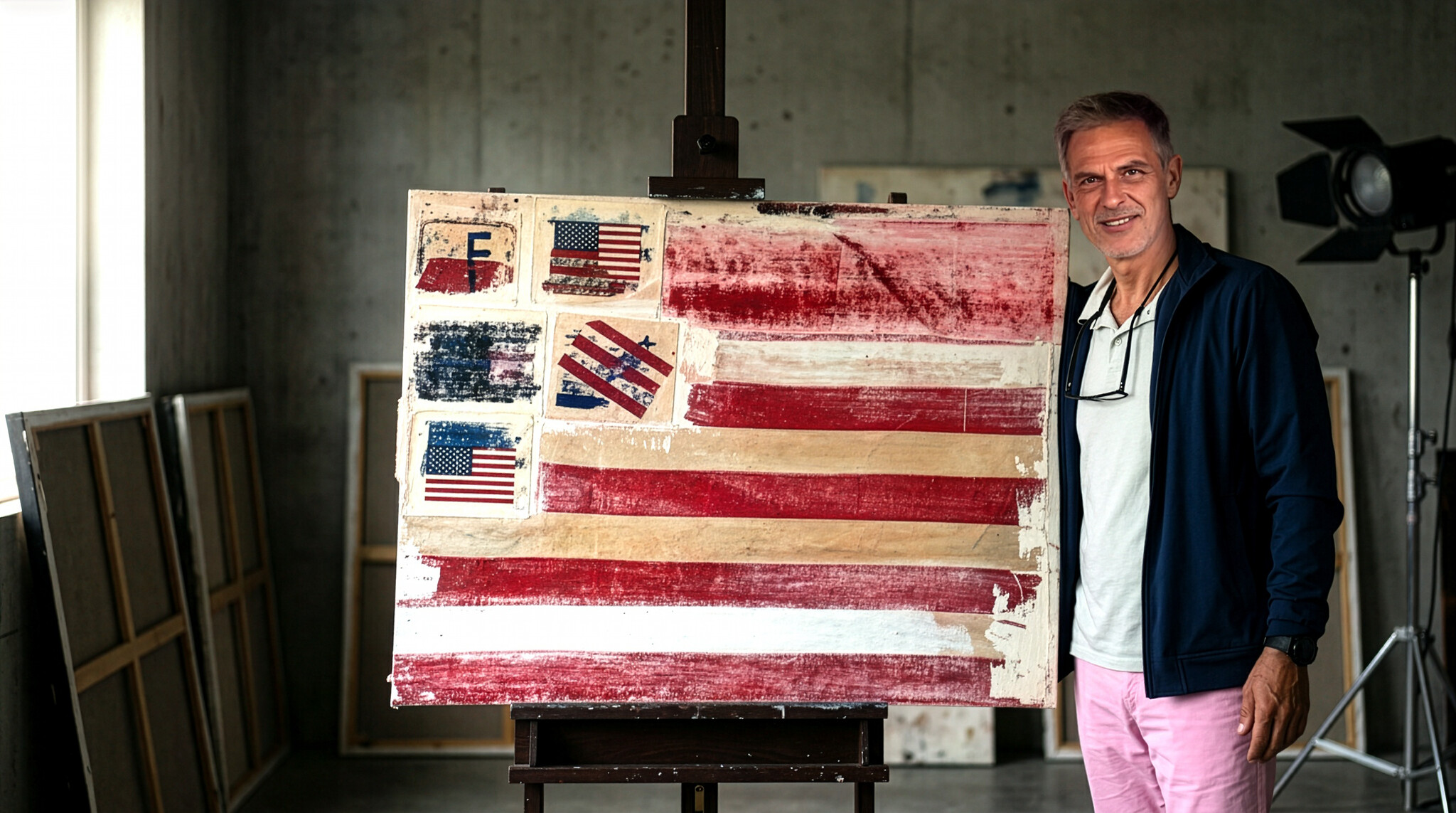
Abstract art and still life offer two very different ways of looking at the world. Still life presents objects that are completely identifiable, such as flowers, fruit, bottles, or books, while abstract art moves away from exact representation and focuses more on color, shape, gesture, and emotion.
In still life, the artist invites the viewer to recognize what is being depicted. The objects remain visible and familiar, even when painted with a loose or expressive style. In abstract painting, however, the image may be simplified, altered, or completely transformed so that it no longer looks like a literal scene.
Abstract expressionism goes even further by emphasizing movement, energy, and personal feeling. Instead of describing an object clearly, it creates a visual experience that can feel spontaneous, emotional, or atmospheric. The viewer is asked not just to identify what is shown, but to respond to the painting on a deeper level.
The difference between abstract and completely identifiable work is really the difference between interpretation and recognition. One speaks through suggestion and feeling; the other speaks through form that can be clearly named. Both approaches can be powerful, and both can reveal something true about the artist’s vision.